
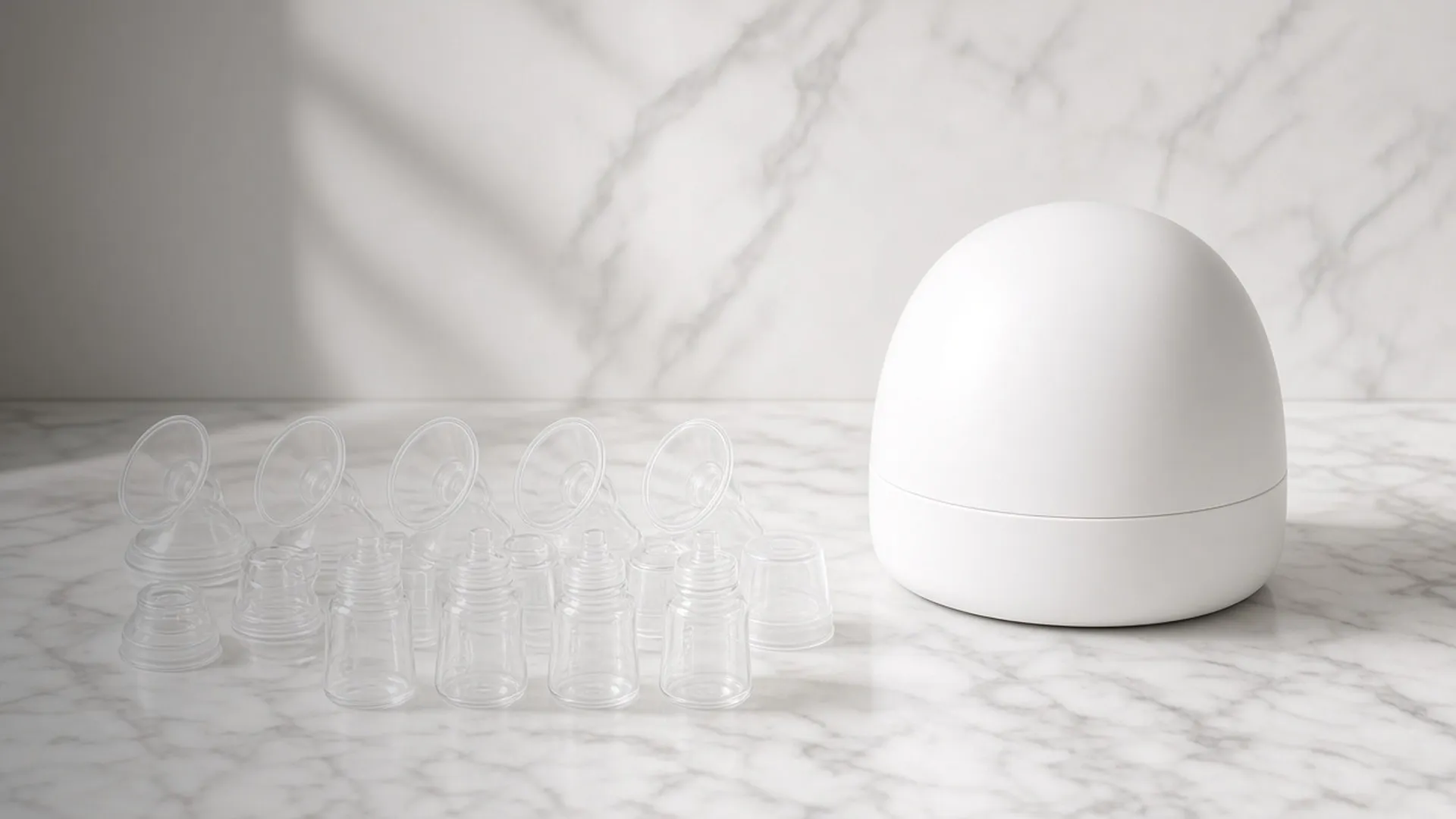
Sanitizing breast pump parts
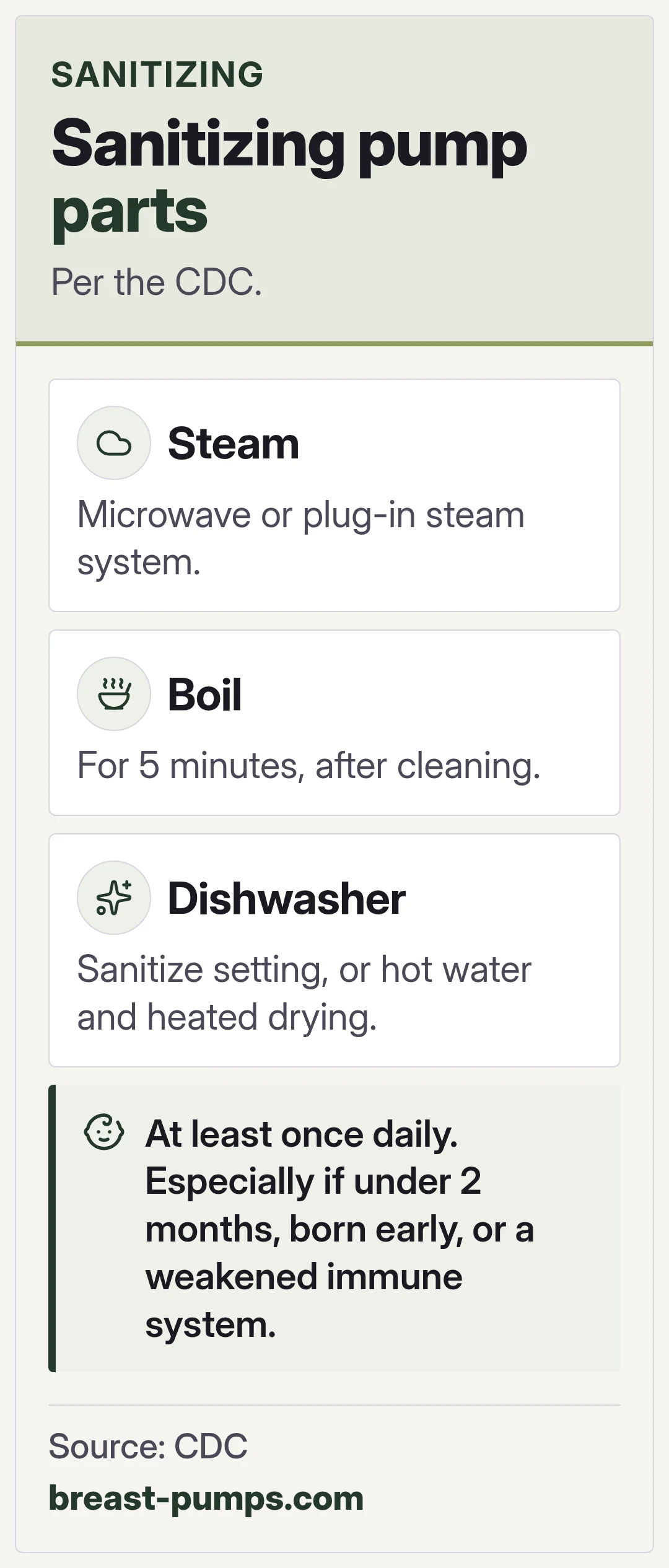
Steam, boiling, or a sanitize setting, after cleaning.
Disclosure: We may earn a commission if you buy through links on this page. It does not change our guidance. Affiliate Disclosure
Clean first
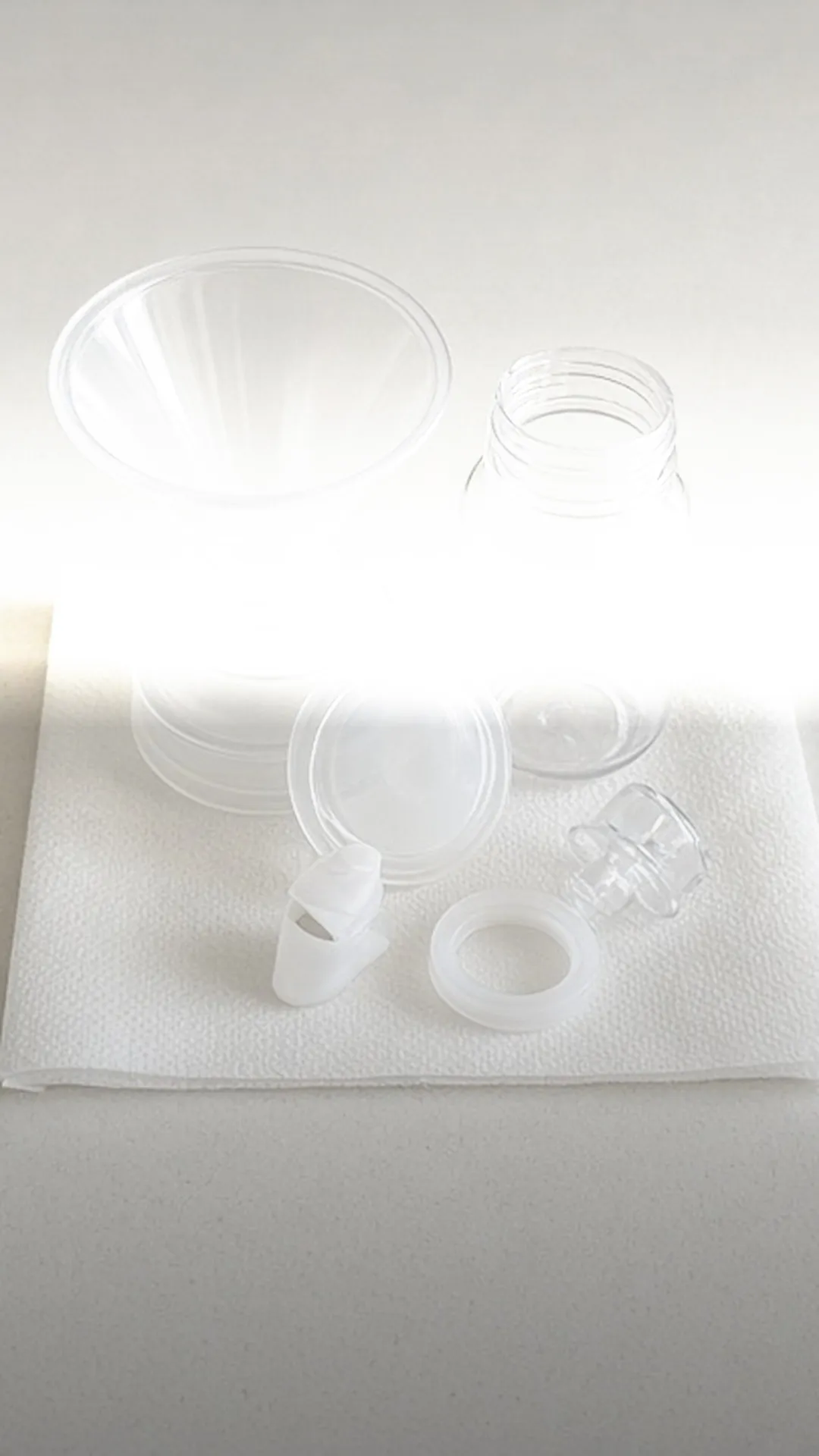
The CDC says pump parts, bottle brushes, and wash basins should be sanitized only after they have been cleaned.
When the CDC says it is especially important
The CDC says to sanitize pump parts at least once daily for extra germ removal. It says sanitizing is especially important if your baby is less than 2 months old, was born prematurely, or has a weakened immune system due to illness or medical treatment.
Three ways
The CDC lists steam, using a microwave or plug-in steam system according to the maker's directions; boiling for 5 minutes; or a dishwasher with a sanitize setting, or hot water and a heated drying cycle. It says to check the maker's instructions about whether items may be steamed or boiled.
Sterilize or sanitize?
The FDA says: "It is not possible to completely sterilize breast pump parts at home, even if you boil them. However, sterilization is not necessary to keep these parts safe and sanitary." It says microwave sterilizers do not meet the FDA definition of sterilization, but will adequately reprocess parts for a single user.
Older, healthy babies
The CDC says daily sanitizing may not be necessary for older, healthy babies, if the parts are cleaned carefully after each use. Ask your baby's doctor what is right for your baby.
Parts that cannot be sanitized
The CDC says to clean and inspect them regularly for cracks, chips, or wear, and to replace them when needed.
FAQ
General information only, not medical advice. For questions about pumping, breastfeeding, milk supply, or feeding your baby, talk to your doctor, midwife, or lactation consultant, or your baby's pediatrician. Follow the maker's instructions for your pump and its parts. The FDA says that if you are injured while using a breast pump or have pain, contact your health care provider. In an emergency, call 911.
Next: cleaning parts
After every use.
