
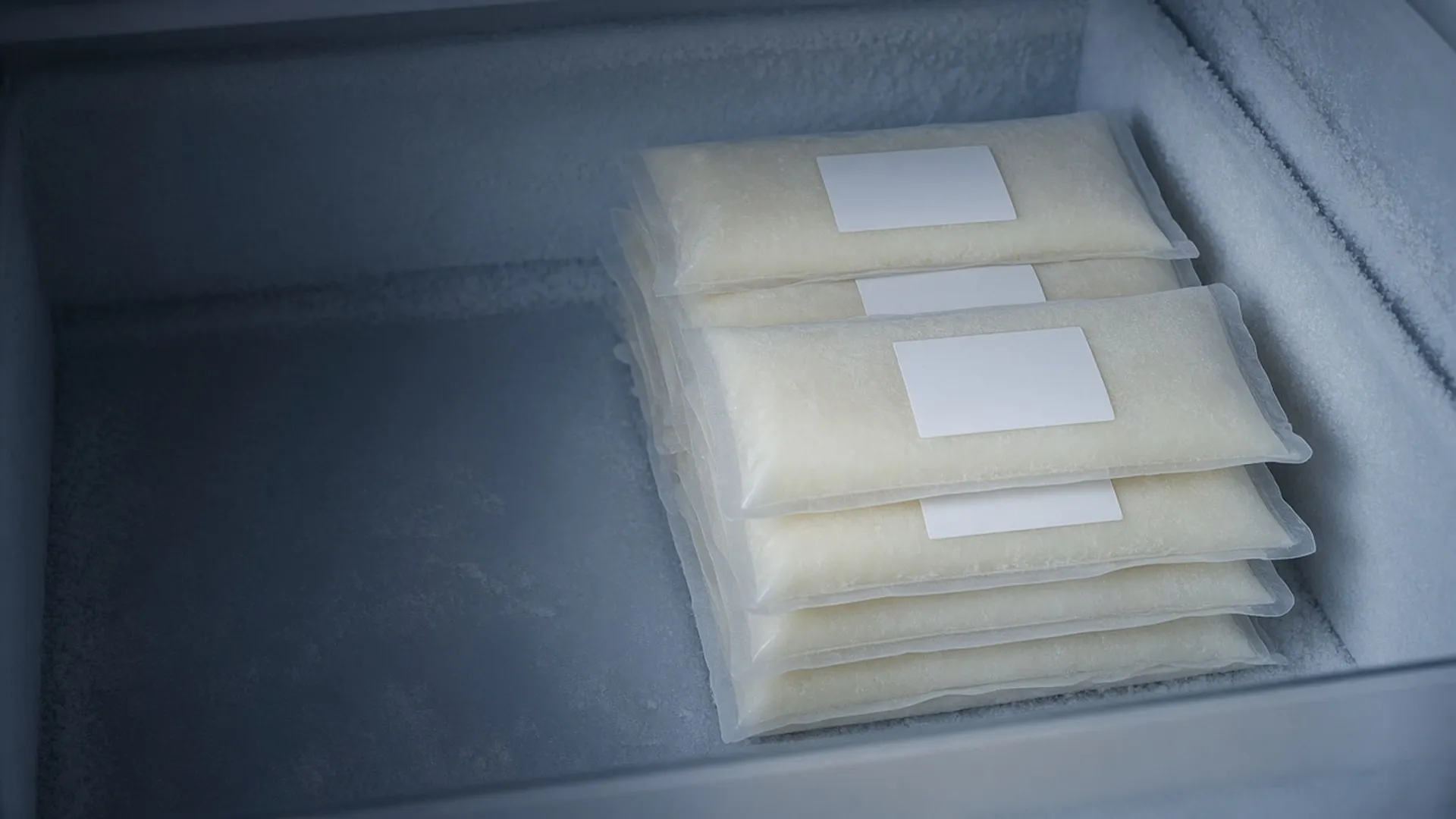
Freezing and thawing breast milk
Freeze, thaw, and warm milk the way the CDC describes.
Disclosure: We may earn a commission if you buy through links on this page. It does not change our guidance. Affiliate Disclosure
Freezing
The CDC says to freeze small amounts, 2 to 4 ounces or the amount offered at one feeding, and to leave about one inch of space at the top of the container because breast milk expands as it freezes.
How long frozen milk keeps
The CDC says frozen milk keeps about 6 months as best, with up to 12 months acceptable, and that recommended storage times are important to follow for best quality.
Thawing
The CDC says to thaw the oldest milk first. It says to thaw milk in the refrigerator overnight, in warm or lukewarm water, or under lukewarm running water.
After thawing
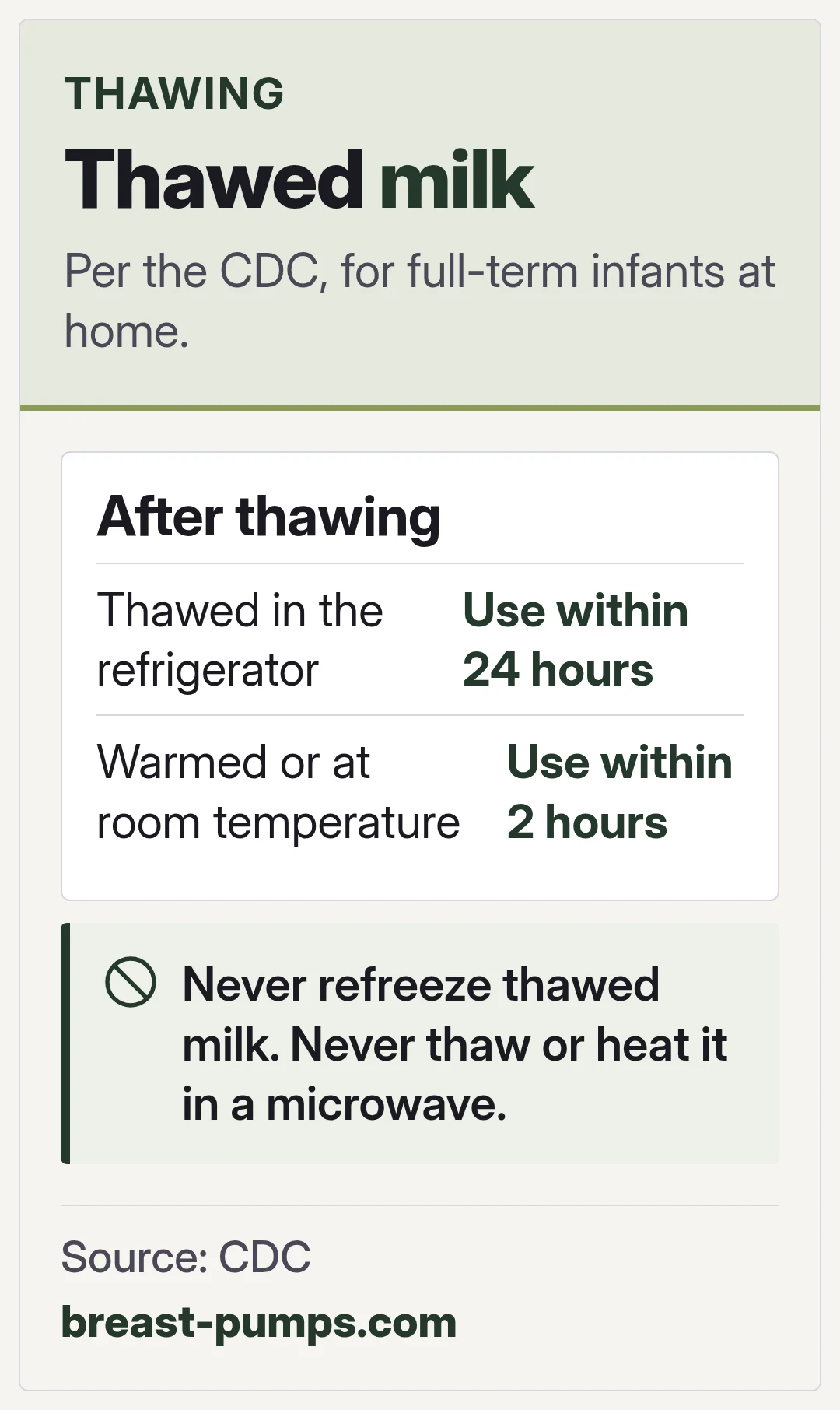
The CDC says that milk thawed in the refrigerator should be used within 24 hours, counted from when it is completely thawed. It says that once milk is brought to room temperature or warmed, use it within 2 hours, and never refreeze it.
Warming, if you choose to
The CDC says breast milk does not need to be warmed. If you warm it, the CDC says to keep the container sealed and set it in warm water, or hold it under warm, but not hot, running water, then test a few drops on your wrist.
Never the microwave
The CDC says: "Never thaw or heat breast milk in a microwave. Microwaving can destroy nutrients in breast milk and create hot spots, which can burn a baby's mouth." It also says not to heat milk directly on the stove.
FAQ
General information only, not medical advice. For questions about pumping, breastfeeding, milk supply, or feeding your baby, talk to your doctor, midwife, or lactation consultant, or your baby's pediatrician. Follow the maker's instructions for your pump and its parts. The FDA says that if you are injured while using a breast pump or have pain, contact your health care provider. In an emergency, call 911.

Next: storing milk
Countertop, fridge, freezer.
