
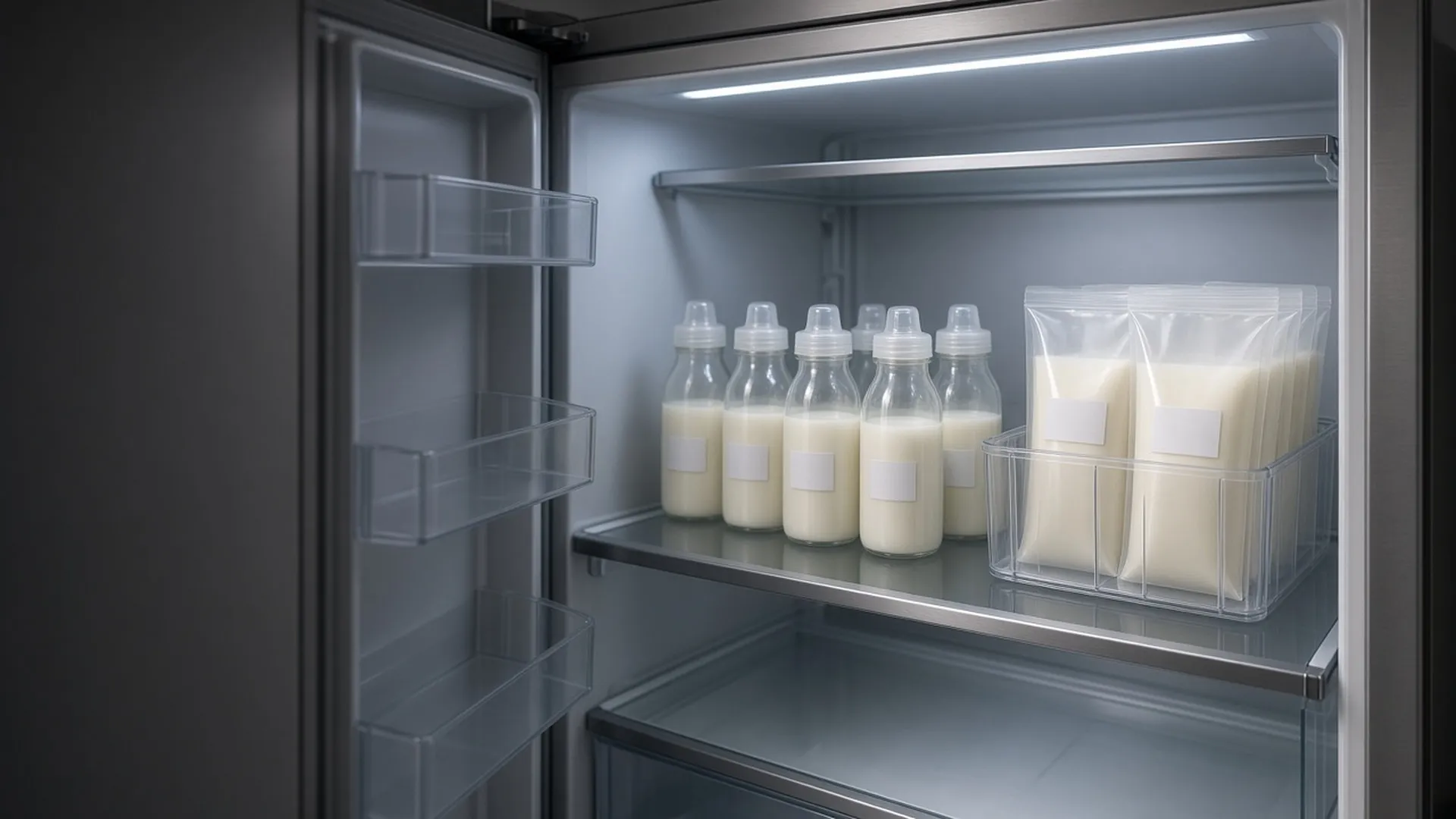
Storing breast milk
Countertop, refrigerator, and freezer times from the CDC.
Disclosure: We may earn a commission if you buy through links on this page. It does not change our guidance. Affiliate Disclosure
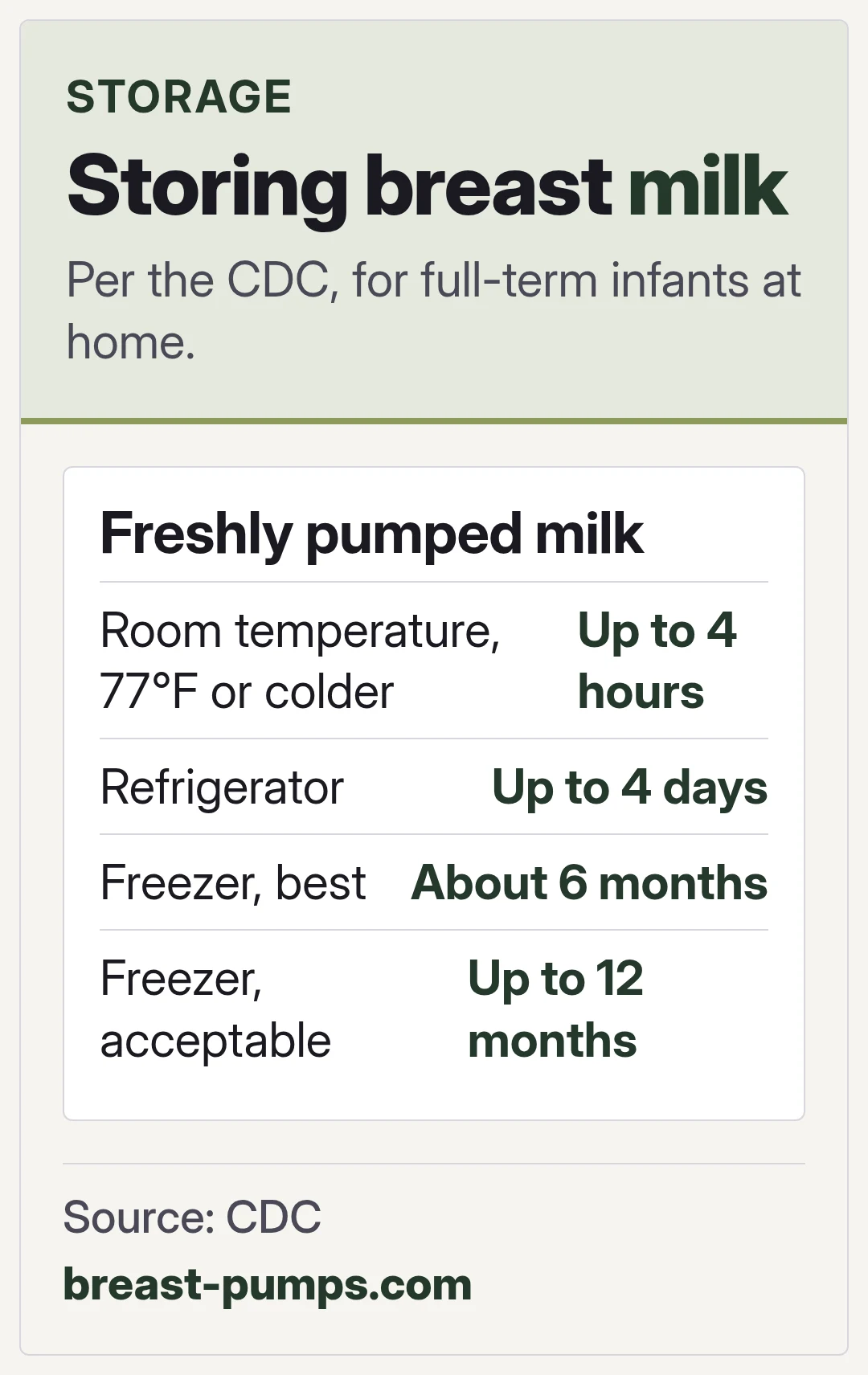
Storage times
For full-term babies at home, the CDC says freshly expressed or pumped milk can be stored at room temperature (77°F or colder) for up to 4 hours, in the refrigerator for up to 4 days, and in the freezer for about 6 months as best, with up to 12 months acceptable.
Who these times are for
The CDC says its storage information is adapted from the Academy of Breastfeeding Medicine's Clinical Protocol #8, Human Milk Storage Information for Home Use for Full-Term Infants. If your baby was born early, is in the hospital, or has other health concerns, ask your baby's health care providers how to store milk for your baby.
Containers
The CDC says to use breast milk storage bags or clean, food-grade containers made of glass or plastic with tight fitting lids. It says never to store breast milk in disposable bottle liners or plastic bags that are not intended for storing breast milk.
Where in the fridge
The CDC says not to store breast milk in the door of the refrigerator or freezer, because storing it further inside helps protect it from temperature changes.
Label it
The CDC says to label breast milk clearly with the date it was expressed, and with the child's name if you deliver it to a childcare provider.
If you will not use it soon
The CDC says that if you do not think you will use freshly expressed milk within 4 days, freeze it right away.
FAQ
General information only, not medical advice. For questions about pumping, breastfeeding, milk supply, or feeding your baby, talk to your doctor, midwife, or lactation consultant, or your baby's pediatrician. Follow the maker's instructions for your pump and its parts. The FDA says that if you are injured while using a breast pump or have pain, contact your health care provider. In an emergency, call 911.

Next: freezing and thawing
Freeze, thaw, and warm.
