

Pumping at work and the PUMP Act
Break time and a private space, as the Department of Labor describes them.
Disclosure: We may earn a commission if you buy through links on this page. It does not change our guidance. Affiliate Disclosure
What the law provides
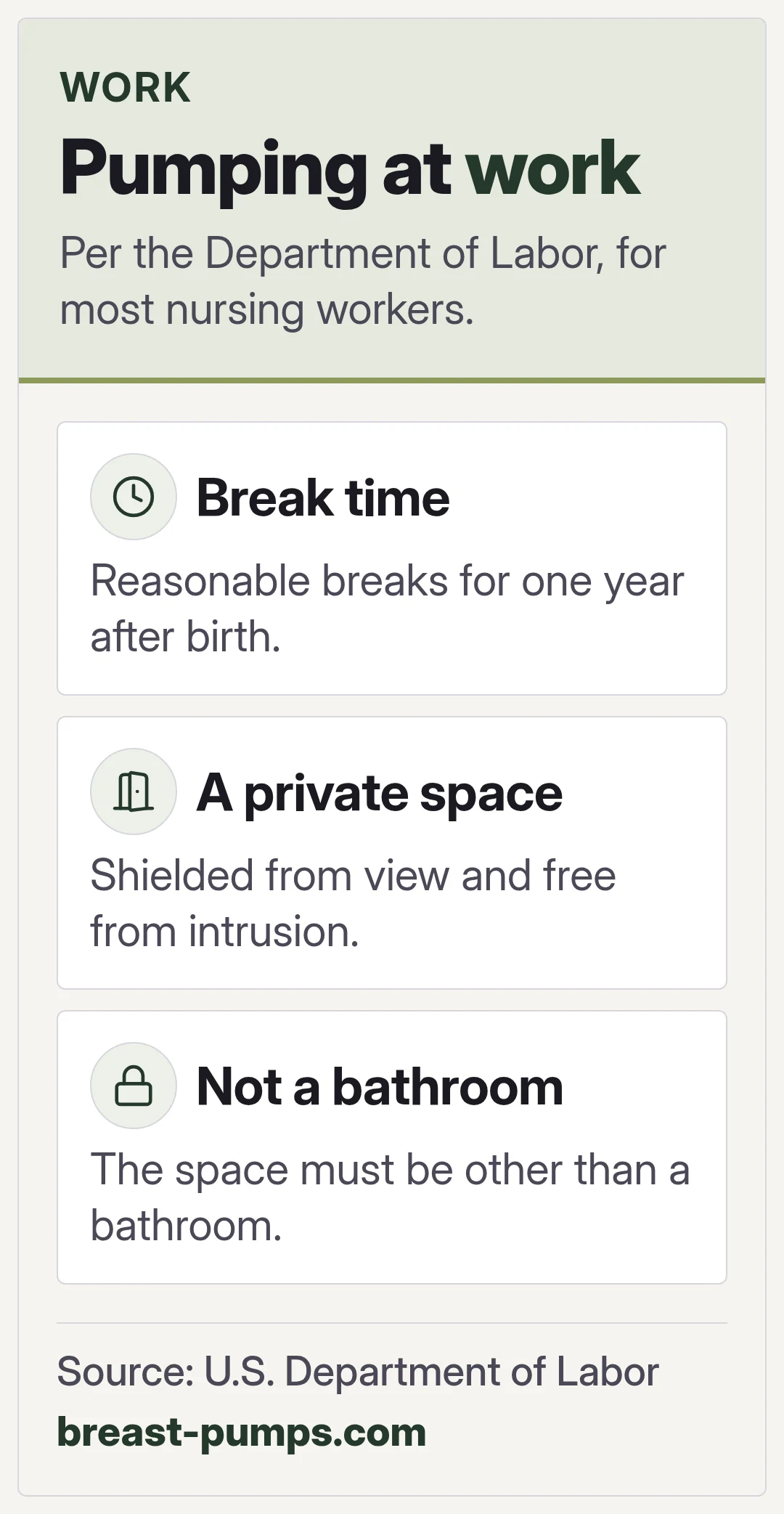
The Department of Labor says most nursing workers are entitled to reasonable break time and a private space to pump at work for up to one year after their child's birth. It says the Fair Labor Standards Act (FLSA) requires employers to provide reasonable break time for an employee to express breast milk for her nursing child for one year after the child's birth, each time she needs to express milk.
A place to pump
The Department of Labor says: "Employees are entitled to a place to pump at work, other than a bathroom, that is shielded from view and free from intrusion from coworkers and the public."
The PUMP Act
The Department of Labor says the PUMP for Nursing Mothers Act became law on December 29, 2022, and expanded these rights to more nursing employees, including agricultural workers, nurses, teachers, truck and taxi drivers, home care workers, and managers.
General information, not legal advice
This is general information, not legal advice. Coverage and exemptions vary, and rules change. Read the Department of Labor's current guidance, and talk to your employer's human resources team or a qualified professional about your situation. The Department of Labor explains how to file a complaint on its site.
Milk at work
The Office on Women's Health says it is OK to put breast milk in a shared refrigerator at work, as long as the container is labeled clearly. The CDC says milk can be kept in an insulated cooler with frozen ice packs for up to 24 hours.
Parts between sessions
The CDC recommends cleaning pump parts thoroughly after every use. It says that if you cannot, you can rinse the parts, keep them in a sealed bag, and refrigerate them for a few hours between uses, but refrigeration does not stop bacteria from growing.
FAQ
General information only, not medical advice. For questions about pumping, breastfeeding, milk supply, or feeding your baby, talk to your doctor, midwife, or lactation consultant, or your baby's pediatrician. Follow the maker's instructions for your pump and its parts. The FDA says that if you are injured while using a breast pump or have pain, contact your health care provider. In an emergency, call 911.


Next: traveling with milk
Coolers and airport screening.
