
Breast pump parts, explained
Shields, valves, membranes, tubing, and bottles.
Disclosure: We may earn a commission if you buy through links on this page. It does not change our guidance. Affiliate Disclosure
The basic parts
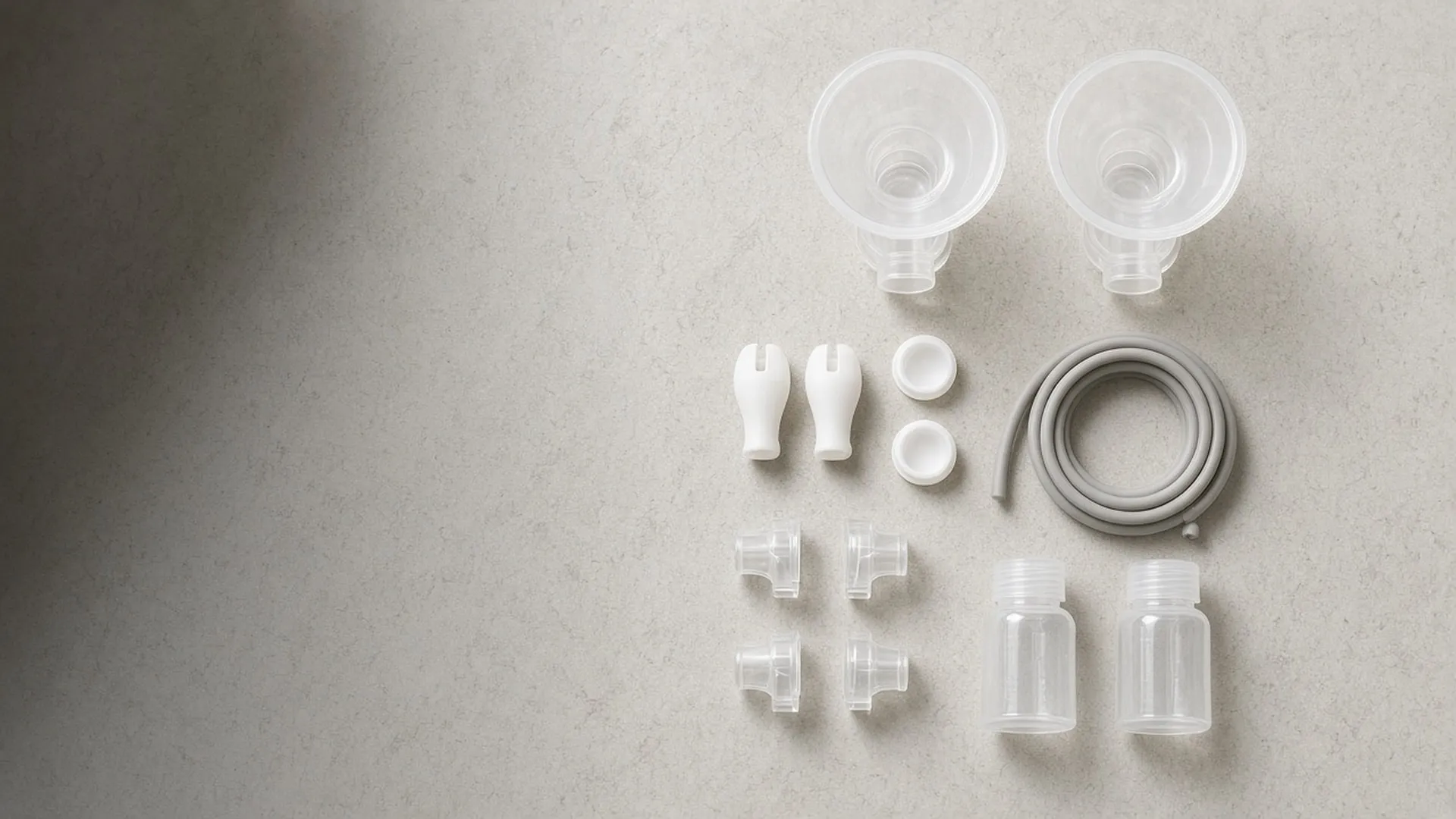
The FDA says every breast pump has a breast shield, a pump that creates the vacuum, and a milk container. The CDC names the parts that come in contact with breast milk, such as flanges, valves, membranes, connectors, and milk collection bottles.
The accessories kit
The FDA says the accessories kit typically includes the milk container, breast shield, and tubing. On a multi-user pump, it says each user needs a personal kit.
Tubing
The CDC says that when used correctly, breast pump tubing does not touch the pumped milk and does not need to be cleaned routinely. It says to keep a spare set of tubing on hand.
When tubing goes bad
The CDC says that if your tubing has milk or mold in it, throw it away immediately, because it is difficult to clean properly. It says to check whether the valves or membranes need to be replaced, or whether the tubing was attached incorrectly.
Replacing parts
We do not give a replacement schedule. The CDC says to clean and inspect parts regularly to make sure they are in good condition, with no cracks, chips, signs of wear and tear, or other defects, and to replace them when needed. Follow the maker's instructions for your pump.
Report a problem
If you suspect a problem with a breast pump, the FDA encourages you to file a voluntary report through MedWatch, the FDA Safety Information and Adverse Event Reporting program. It lists pump problems, infections that might be related to the pump, and mold or mold-like substances in a pump as things to report. The FDA's 2023 consumer update says you can report by phone at 1-800-FDA-1088 or online at MedWatch. If you are injured while using a pump or have pain, the FDA says to contact your health care provider.
FAQ
General information only, not medical advice. For questions about pumping, breastfeeding, milk supply, or feeding your baby, talk to your doctor, midwife, or lactation consultant, or your baby's pediatrician. Follow the maker's instructions for your pump and its parts. The FDA says that if you are injured while using a breast pump or have pain, contact your health care provider. In an emergency, call 911.
Next: cleaning parts
After every use.
