
Used breast pumps and sharing
Why the FDA says single-user pumps stay with one person.
Disclosure: We may earn a commission if you buy through links on this page. It does not change our guidance. Affiliate Disclosure
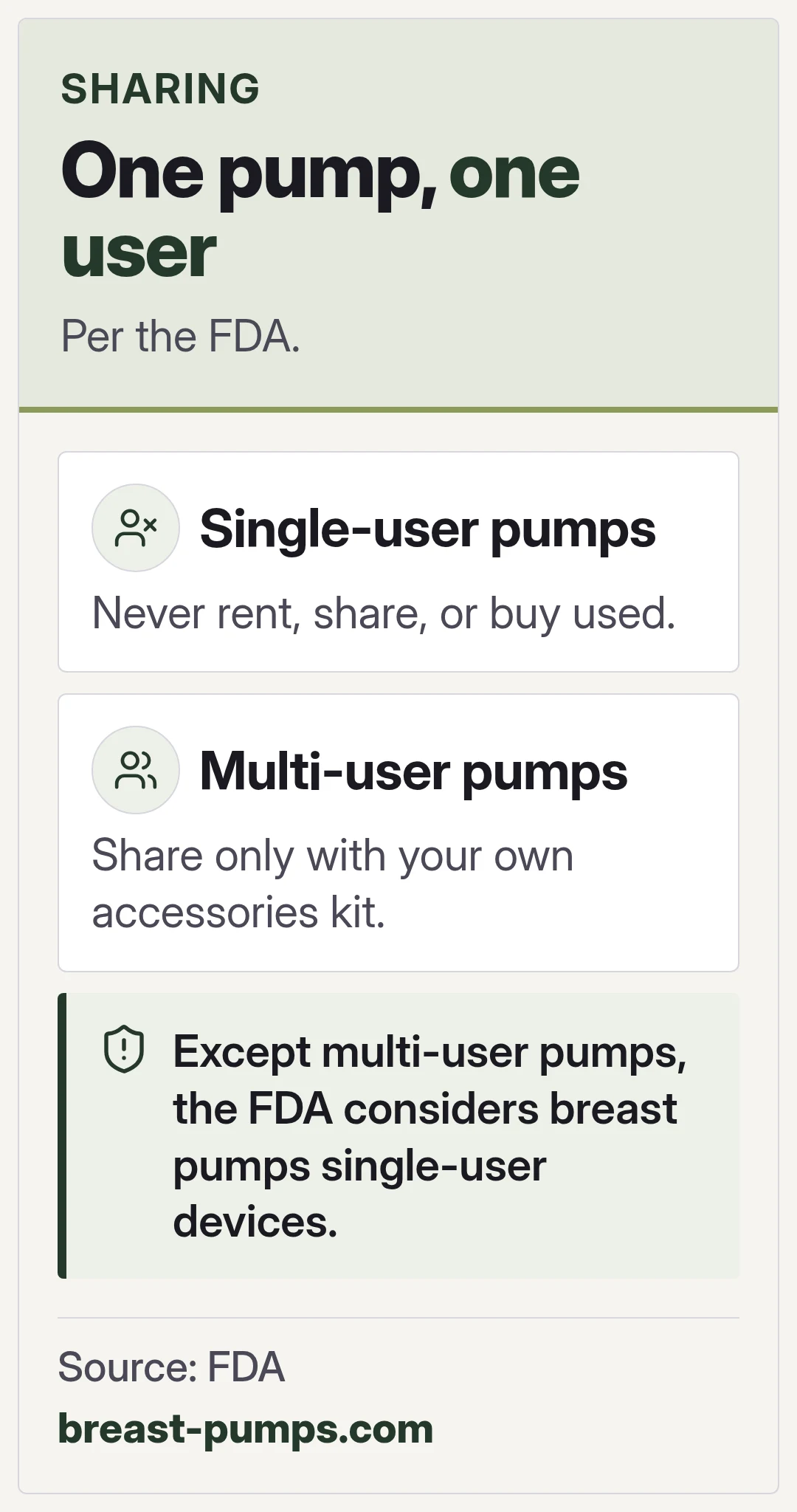
Single-user devices
The FDA says: "With the exception of multiple user pumps, the FDA considers breast pumps to be single-user devices. That means that a breast pump should only be used by one woman because there is no way to guarantee the pump can be cleaned and disinfected between uses by different women."
Buying used
The FDA says: "You should never buy a previously used or 'pre-owned' pump designed for single users." It says pumps sold secondhand can expose you and your baby to contamination.
Sharing with family or friends
The FDA says renting or sharing a pump that is not designed for multiple users can be dangerous, even with family and friends. It says contaminated breast pumps could cause you and your baby to develop an infection.
Looks clean is not enough
In a July 2023 FDA consumer update, FDA obstetrician-gynecologist Kelly Colden, M.D., M.P.H., is quoted as saying: "Even if a used device looks really clean, potentially infectious particles may survive in the breast pump and/or its accessories for a surprisingly long time."
Warranty
The FDA says buying a used breast pump or sharing one may violate the maker's warranty, so you may not be able to get help from the maker if you have a problem.
We do not sell used pumps
We do not sell, list, or link to used breast pumps.
FAQ
General information only, not medical advice. For questions about pumping, breastfeeding, milk supply, or feeding your baby, talk to your doctor, midwife, or lactation consultant, or your baby's pediatrician. Follow the maker's instructions for your pump and its parts. The FDA says that if you are injured while using a breast pump or have pain, contact your health care provider. In an emergency, call 911.

Next: renting a pump
Multi-user pumps and your own kit.
