
How to choose a breast pump
The questions the FDA suggests asking first.
Disclosure: We may earn a commission if you buy through links on this page. It does not change our guidance. Affiliate Disclosure
Start with how you will use it
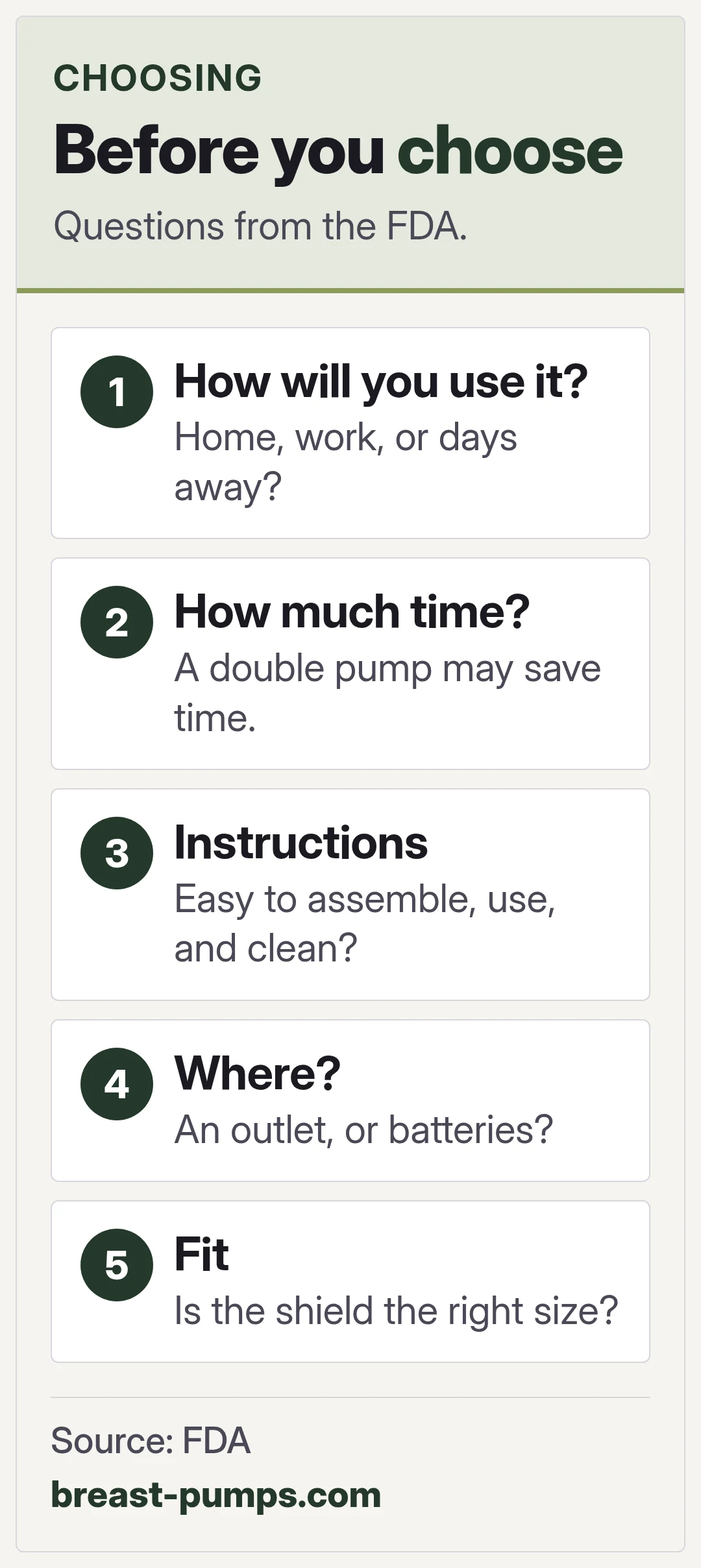
The FDA suggests asking whether you will pump in addition to breastfeeding, whether you plan to pump and store several containers of milk, whether you are returning to work, and whether you will be away from your baby for several days.
Time and place
The FDA suggests asking how much time pumping will take and where you will pump. It says manual and battery-powered pumps can be easy to transport and use in small spaces, while an electric pump needs an outlet.
Instructions you can follow
The FDA says to review the instructions included with several pumps, if possible, and choose one that is easy for you to assemble, use, and clean.
Fit
The FDA says to make sure the breast shield opening is the correct size for you, and to check whether the maker sells other sizes that will work with the pump. Our flange fit guide covers who can help.
Returns
The FDA says that for health reasons, most stores will not allow you to return a breast pump. Check the store's return policy before you buy.
Who can help
We do not pick a pump. The FDA says that a qualified health professional, such as your doctor or a certified lactation consultant, can help guide your decision.
FAQ
General information only, not medical advice. For questions about pumping, breastfeeding, milk supply, or feeding your baby, talk to your doctor, midwife, or lactation consultant, or your baby's pediatrician. Follow the maker's instructions for your pump and its parts. The FDA says that if you are injured while using a breast pump or have pain, contact your health care provider. In an emergency, call 911.

Next: pump types
Manual, battery, electric.
